The original crossing
Opened in London in 1831
John Rennie designed the five-arch bridge for the River Thames; his son completed the work after Rennie’s death.
Read the official bridge history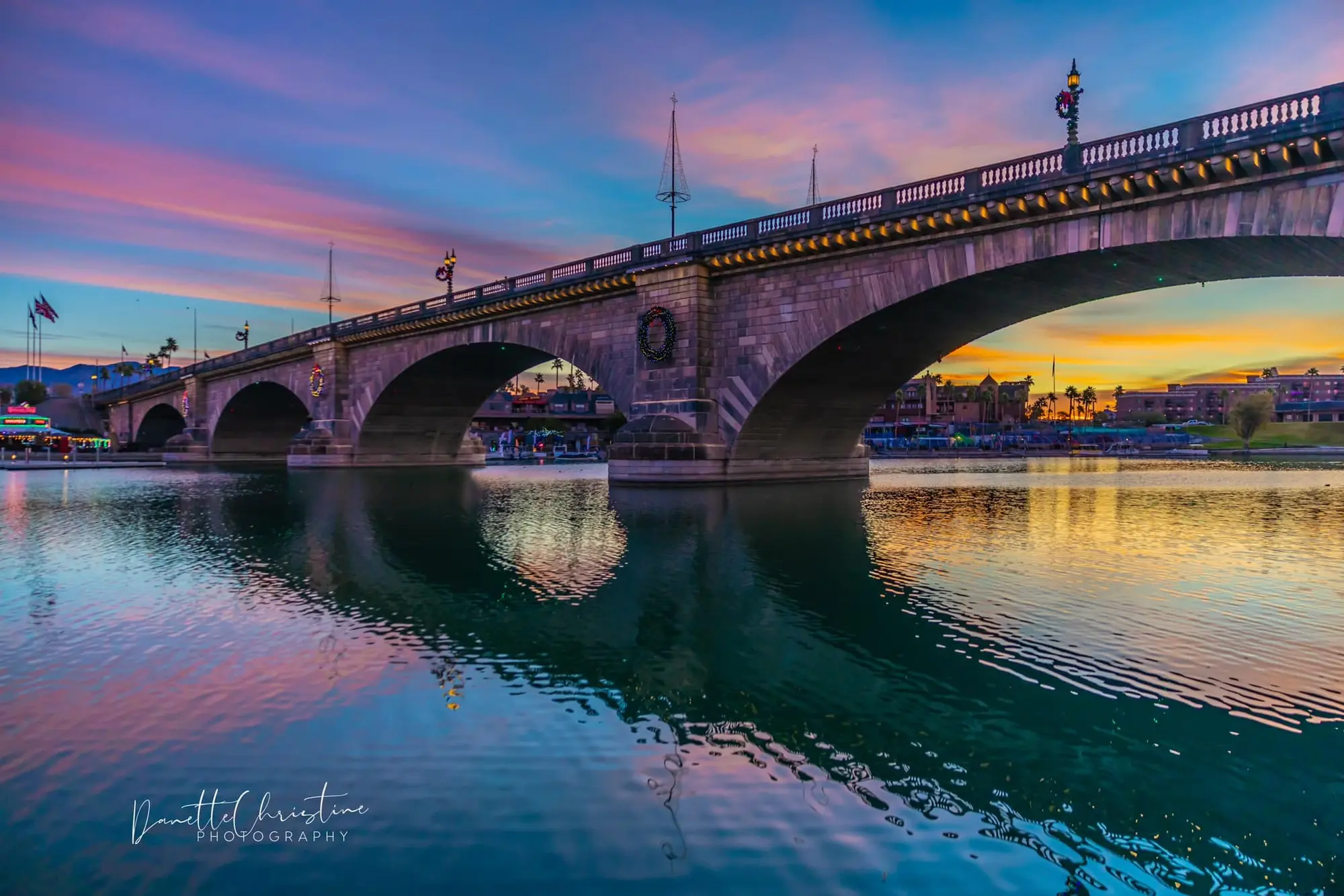
THE REAL STORY · 1831 TO 1971
This is the actual London Bridge that crossed the River Thames—not a replica and not Tower Bridge. Robert P. McCulloch bought it from the City of London in 1968, moved its exterior granite to Arizona and rededicated the rebuilt bridge in 1971.
The timeline in six useful stops
These are not trivia tiles. Together they explain which bridge came to Arizona, what was purchased, how it was rebuilt and what a visitor can still see today.
The original crossing
John Rennie designed the five-arch bridge for the River Thames; his son completed the work after Rennie’s death.
Read the official bridge historyThe Arizona purchase
Robert P. McCulloch bought the bridge while developing Lake Havasu City and used a world-famous landmark to introduce the new community.
Why London sold itThe winning bid
That figure was the purchase price—not the complete cost of dismantling, shipping, rebuilding and creating the Channel.
Compare the cost factsThe original material
The granite facing stones were documented and numbered before transport, then fitted around a modern Arizona structural core.
See the stonework in personThe Arizona opening
More than 50,000 people attended the dedication, according to the official Lake Havasu City history.
Plan your own visitThe bridge today
It remains a working road and pedestrian crossing over Bridgewater Channel, not a fenced historic display.
Use the walking routeFrom the photo archive
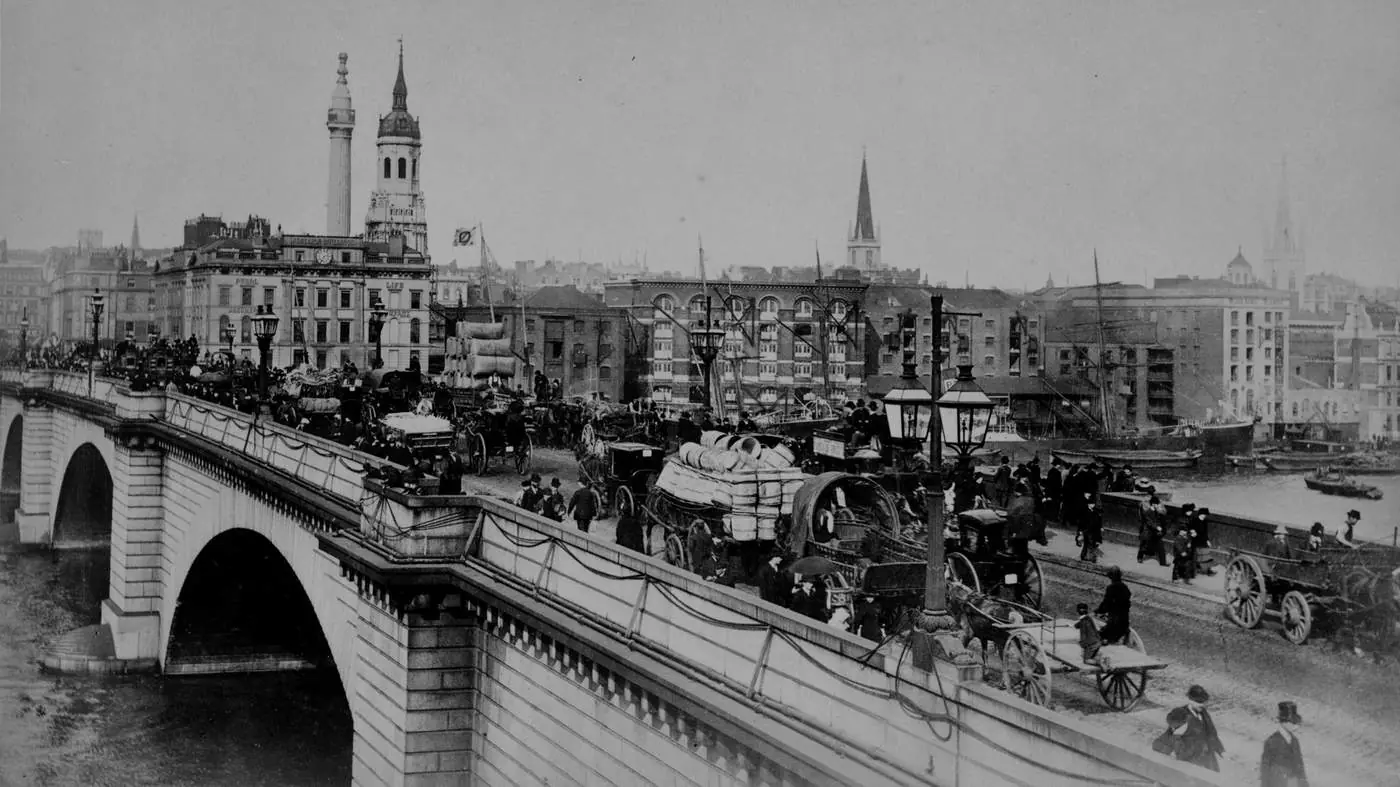
Lake Havasu City has the granite exterior of the London Bridge that opened across the River Thames in 1831. Engineer John Rennie designed it, and his son oversaw construction after Rennie died. It replaced the much older bridge associated with medieval buildings and the nursery rhyme.
It is not Tower Bridge—the bridge with two towers and opening roadway that many people picture when they hear “London Bridge.” Tower Bridge remains in London. The simpler stone-arch bridge sold to Robert P. McCulloch is the one standing over Bridgewater Channel today. See the quick fact and myth guide if you want the short answers without the full timeline.
The distinction matters because several different structures have carried the London Bridge name. The medieval bridge was removed in the 1800s; Rennie’s 1831 bridge replaced it; and the modern concrete bridge opened in London in 1973. Lake Havasu received the stone facing from Rennie’s bridge, which is why both the original material and the modern supporting structure can be true at the same time.
From the photo archive
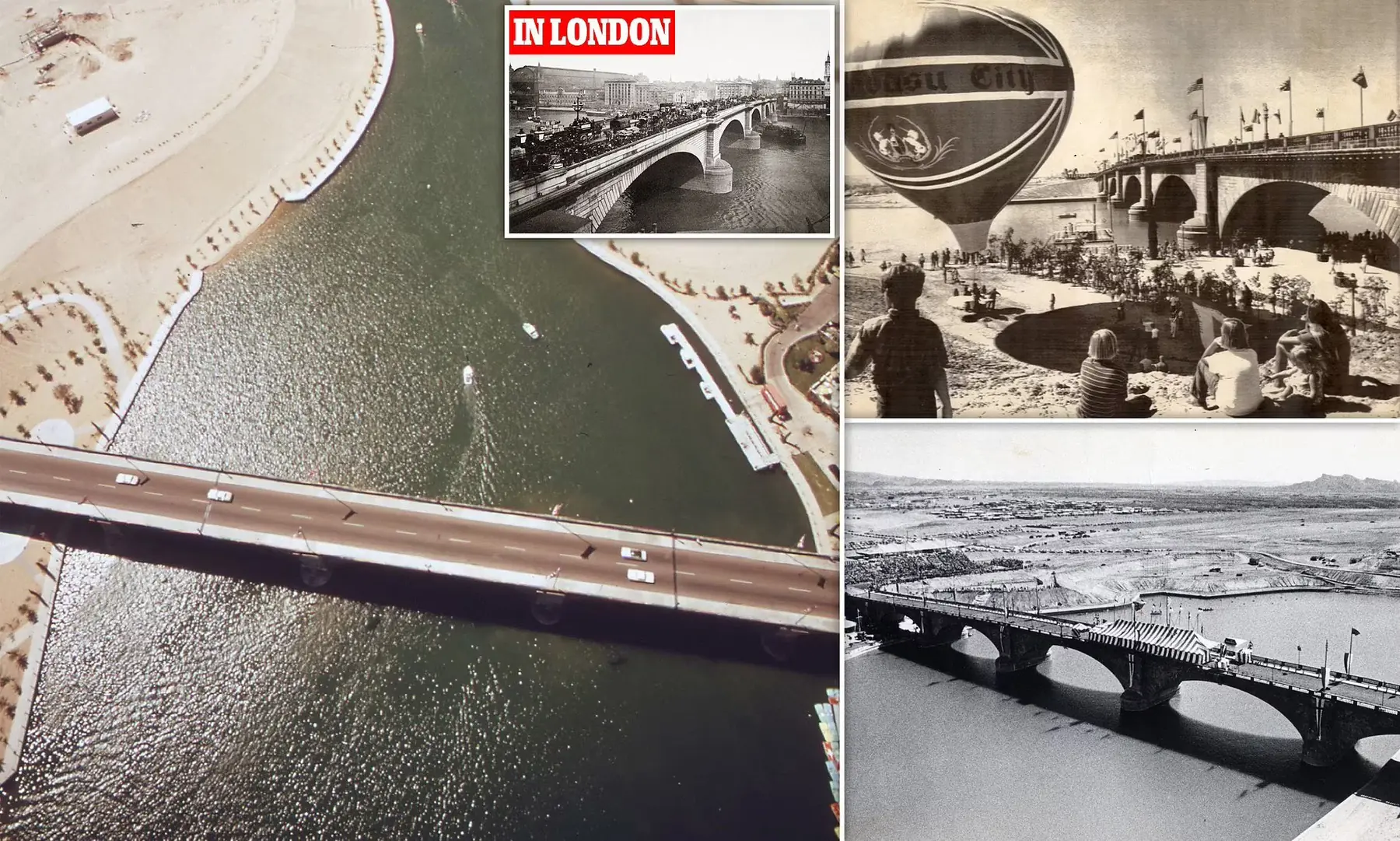
By the 1960s, the 19th-century bridge was no longer a good fit for modern London traffic. The granite structure was heavy, the riverbed had settled, and the bridge was being replaced with a wider crossing. The City of London offered the old bridge for sale rather than treating the complete structure as ordinary demolition material.
McCulloch purchased it in 1968 for a reported $2.46 million. He was developing Lake Havasu City and understood that a landmark people already recognized could introduce a new desert community to the world. The purchase was both a preservation project and a very deliberate piece of city-building.
The bid itself was reportedly calculated from the estimated cost of dismantling the bridge plus a symbolic amount based on McCulloch’s age. What mattered afterward was much larger: thousands of pieces had to be cataloged, transported across an ocean and desert, and reassembled into infrastructure that could carry modern traffic.
For Lake Havasu City, the bridge did more than create a photo stop. It gave prospective residents, travelers and the national press a reason to locate a community that was still taking shape on the Arizona side of the Colorado River.
From the photo archive
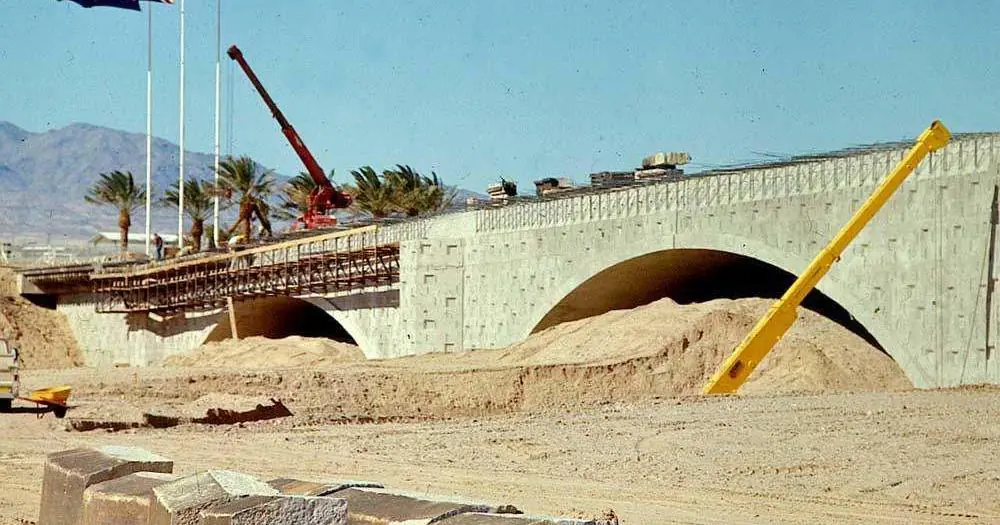
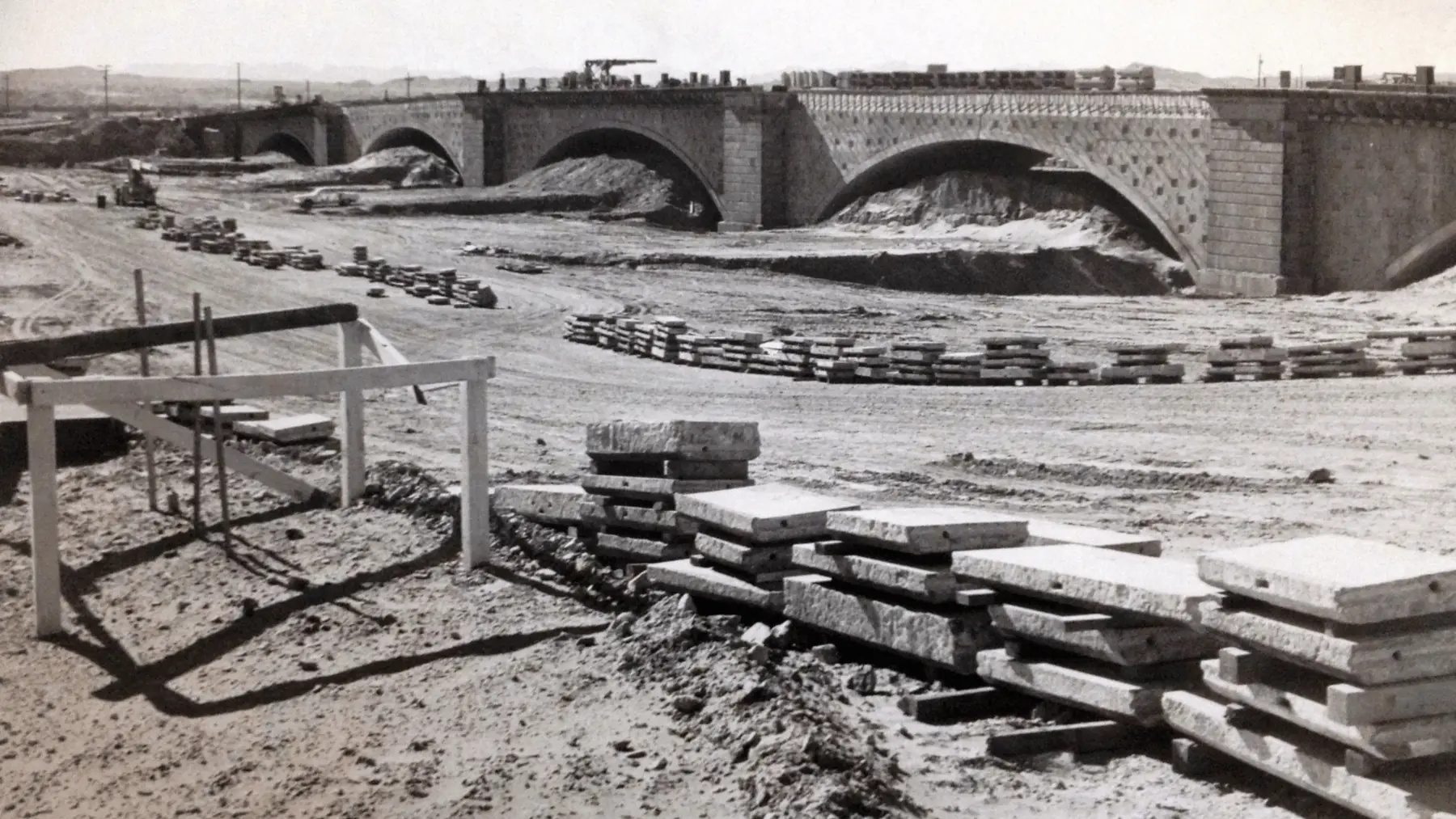
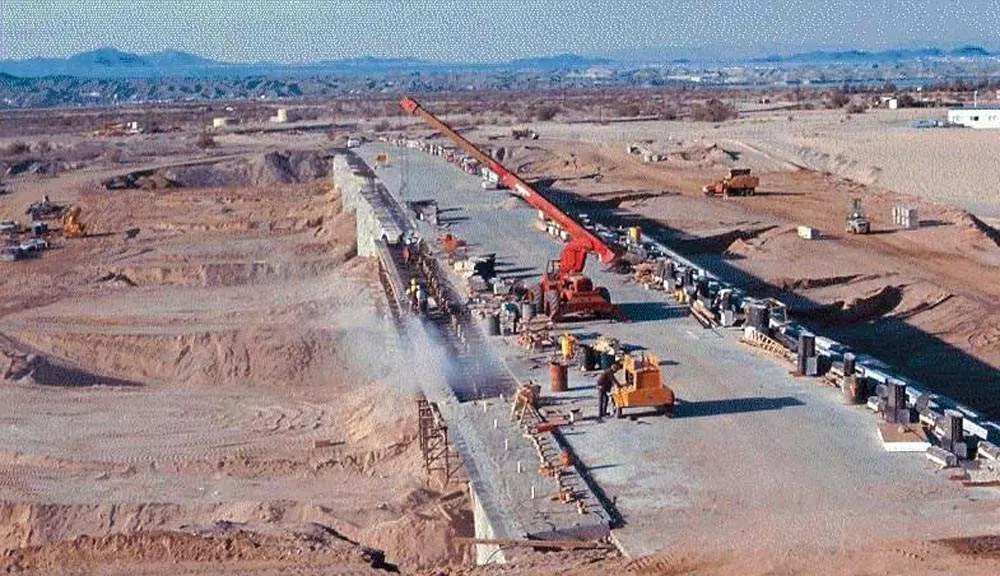
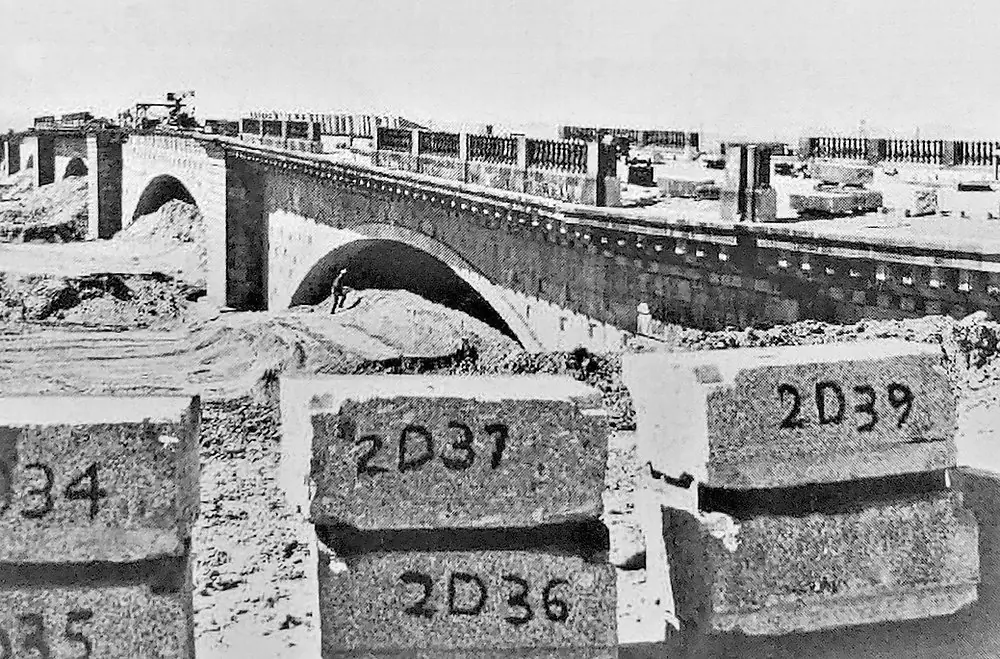
Workers documented and numbered the bridge’s exterior granite blocks before dismantling them. Go Lake Havasu reports 10,276 exterior blocks. The stone traveled by ship to the Port of Long Beach and then overland to Lake Havasu City.
Calling the project a simple stone-by-stone reassembly leaves out an important detail: the Arizona bridge has a modern structural core. A steel-supported concrete structure carries the load, while the original London granite forms its exterior facing. That design reduced weight and allowed the rebuilt bridge to handle vehicles in its new setting.
The shipment traveled through the Panama Canal to Long Beach before continuing overland to Arizona. At the reconstruction site, the numbering system helped masons return visible stones to their intended locations. You may still notice markings on portions of the granite when you walk the bridge and Channel edges.
From the photo archive
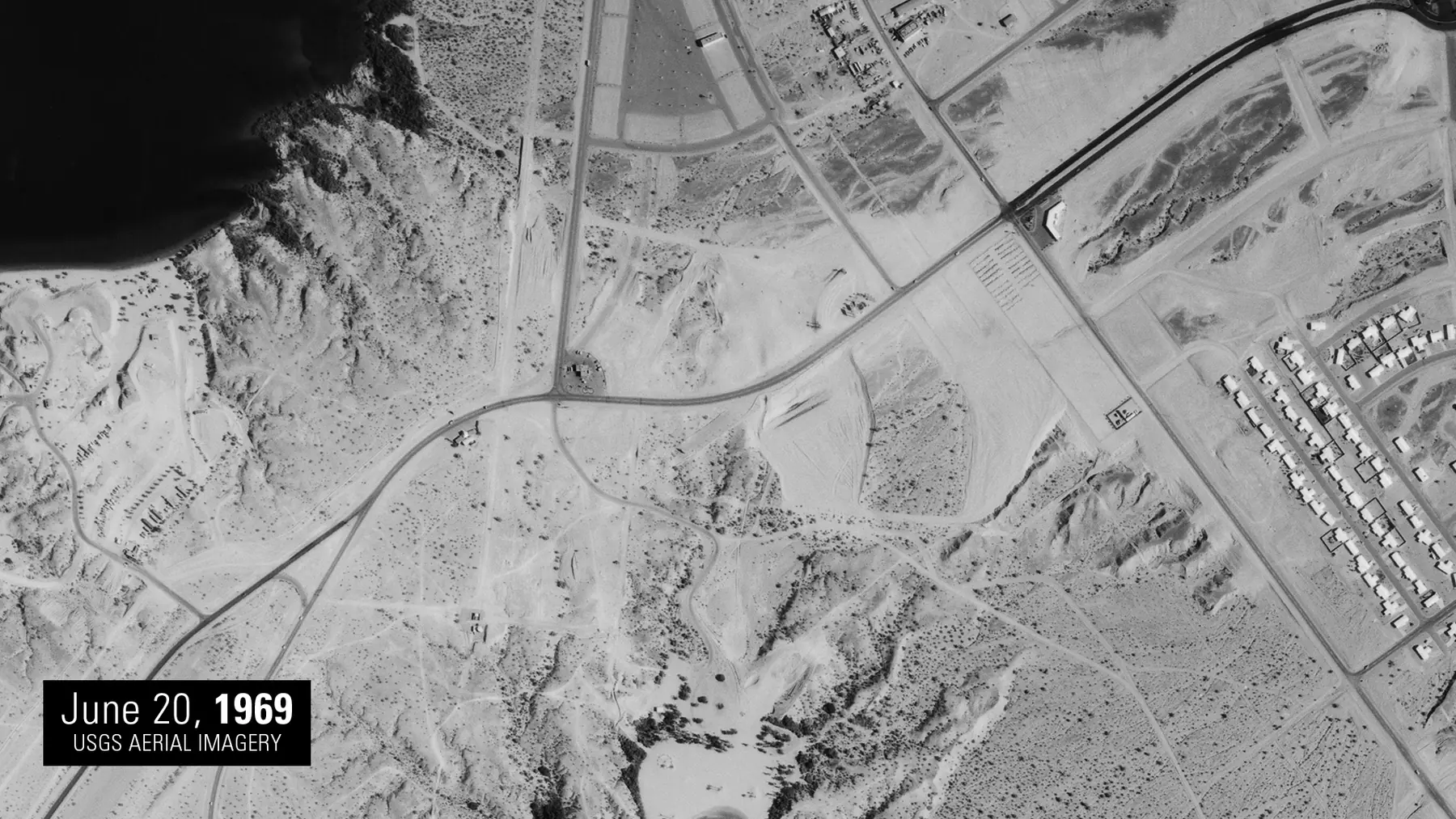
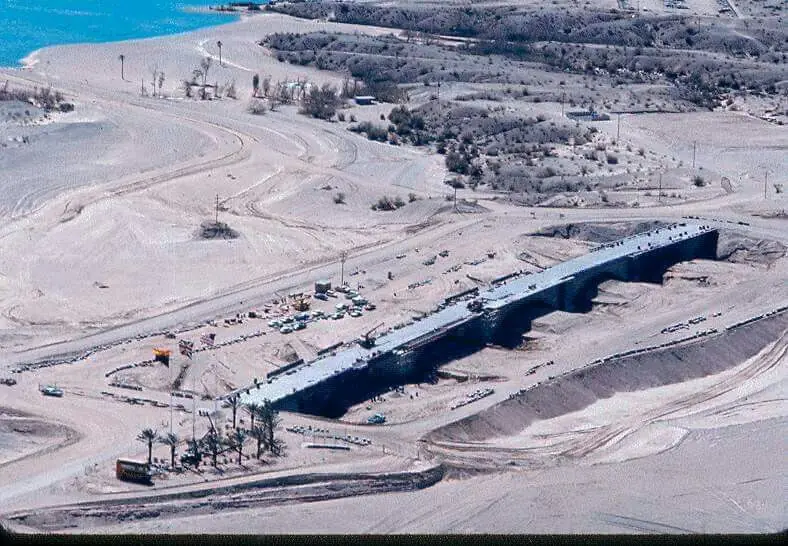
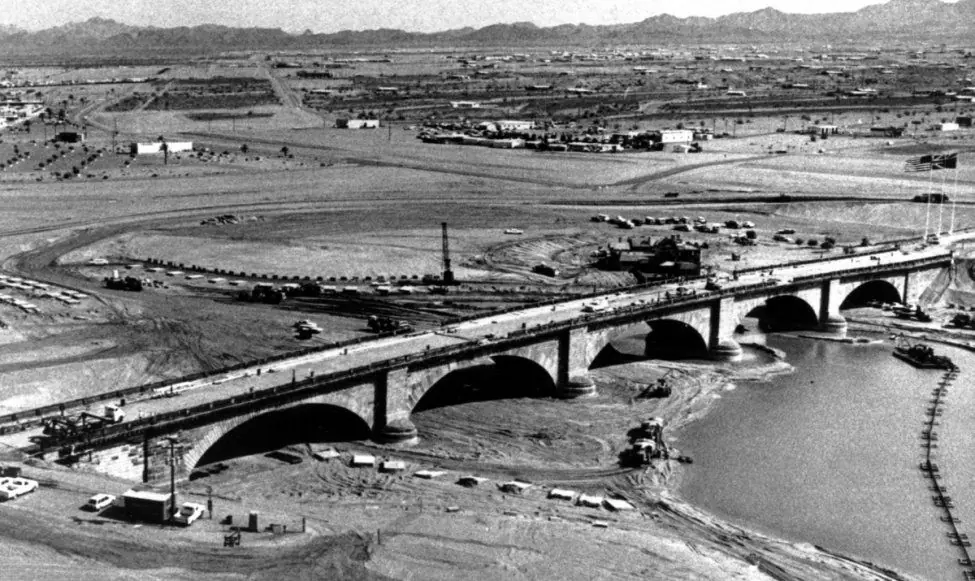
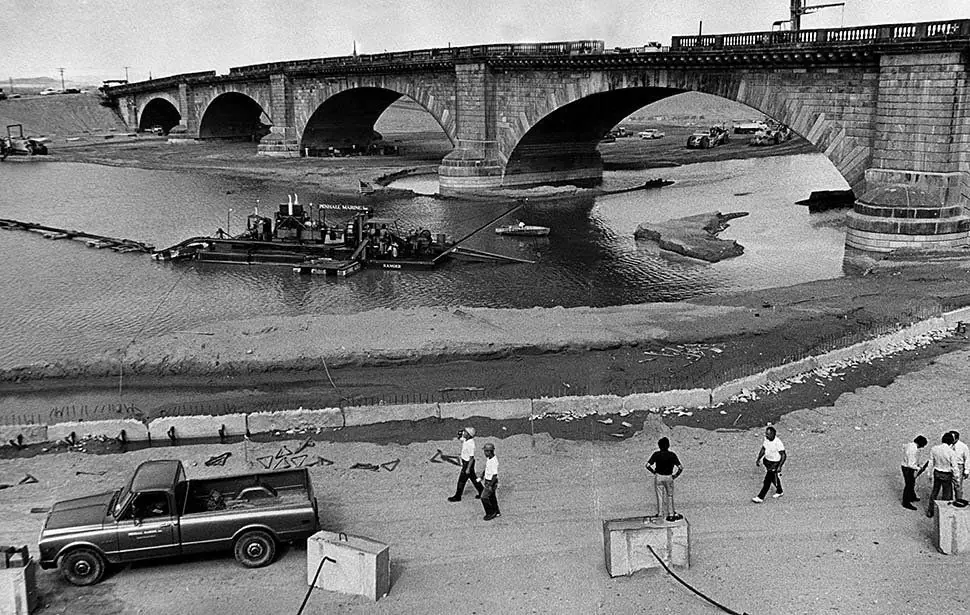
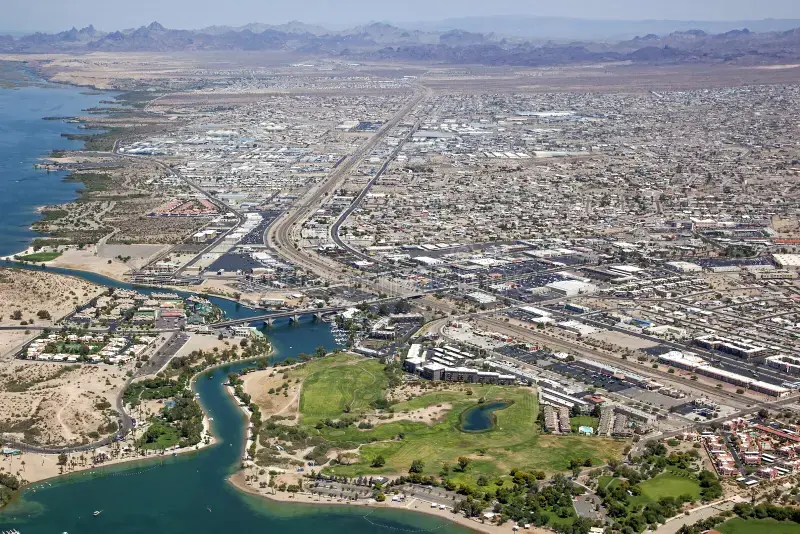
The bridge was reconstructed on dry land between mainland Lake Havasu City and Pittsburg Point. Afterward, the waterway beneath it was excavated and flooded. Bridgewater Channel connected the lake on both sides and turned Pittsburg Point from a peninsula into the Island.
That sequence explains one of the most common questions: the bridge did not arrive to span an existing river or canal. The crossing and the man-made Channel were planned together as part of McCulloch’s development. The result now supports cars, pedestrians and cyclists above, with boat traffic moving below. Explore the Bridgewater Channel guide for the present-day layout.
Before excavation, Pittsburg Point was connected to the mainland. Opening the Channel on both ends placed water around it and created what residents now call the Island. The bridge became the primary road connection, while the narrow waterway established a distinct waterfront district beneath it.
From the photo archive
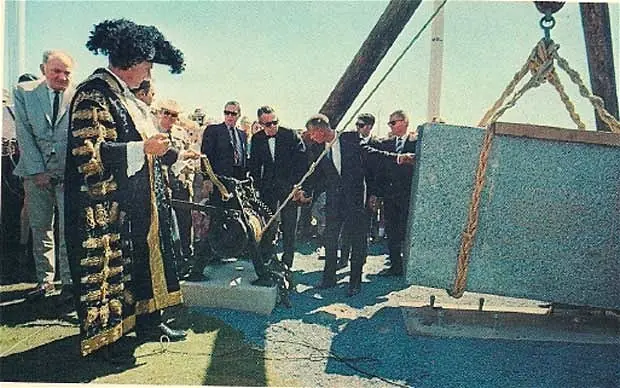
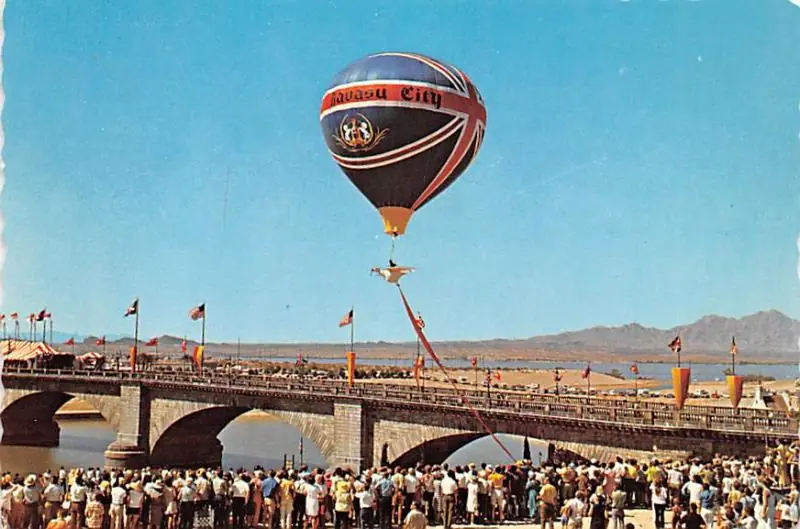
Lake Havasu City dedicated the bridge on October 10, 1971, after roughly three years of reconstruction. The English Village was developed beside the mainland end as a visitor and commercial area, reinforcing the bridge district as the city’s public front door.
The bridge still functions as infrastructure rather than a fenced museum piece. You can drive across it, walk the sidewalks, see numbered stones and view the arches from the Channel. That everyday use is a large part of what makes the relocation story unusual: a piece of London history became part of daily life in western Arizona.
The mainland end grew around English Village and the visitor district; the Island side developed with parks, beaches, resorts and residential neighborhoods. The bridge therefore connects both the city’s origin story and two places visitors use very differently today.
For the best sense of scale, do not stop with a drive across the roadway. Start at Channel level, look through the arches, then cross on foot if weather and mobility allow. The visitor guide gives a parking point, walking order and live map.
Plan for the season—and today’s conditions
Lake Havasu offers a different kind of day in every season. Summer is built around early starts, water and shade; winter often brings comfortable afternoons with cooler mornings, evenings and boat rides. Check the live forecast here, then match your bridge walk, Channel stop or lake plan to the temperature and wind you will actually have.

Question → answer → direction
Yes. Its exterior uses the numbered granite blocks from the 1831 London Bridge. The rebuilt Arizona structure has a modern supporting core faced with that original stone.
There is no credible evidence that McCulloch confused the two bridges. He pursued the purchase through a formal sale and used the London Bridge deliberately to promote the city he was developing.
The reported purchase price was $2.46 million. Moving and rebuilding it cost substantially more than the winning bid itself.
The reconstructed bridge was dedicated in Lake Havasu City on October 10, 1971.
Check the original source
Historical facts are anchored to official tourism, city and state sources. Use those destinations for schedules, rules and other details that can change after this page is updated.
Keep the plan connected

SHORT ANSWERS
Yes, it is the real 1831 London Bridge from England. No, it is not Tower Bridge. The original granite faces a modern supporting structure, and the Channel beneath it was excavated after the bridge was rebuilt in Arizona.
Open the guide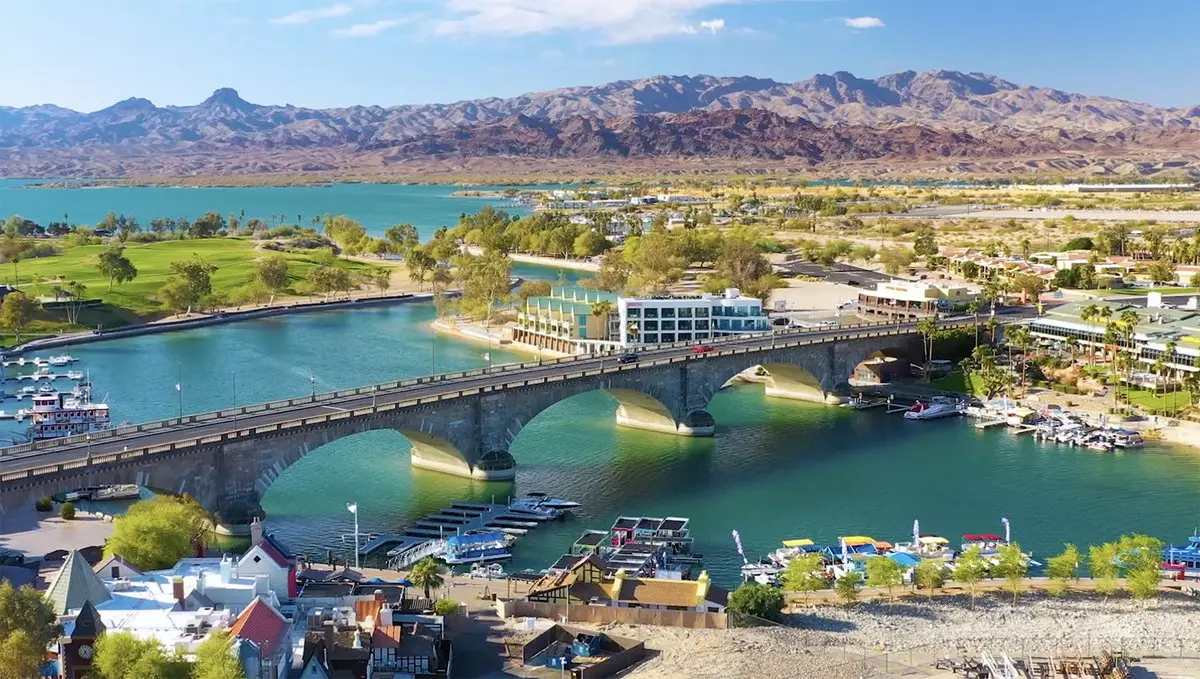
MAP
You do not need a ticket to see or cross the London Bridge. The easiest first stop is the Go Lake Havasu Visitor Center at 422 English Village, where free parking, maps and local information put you beside the mainland end of the bridge.
Open the guide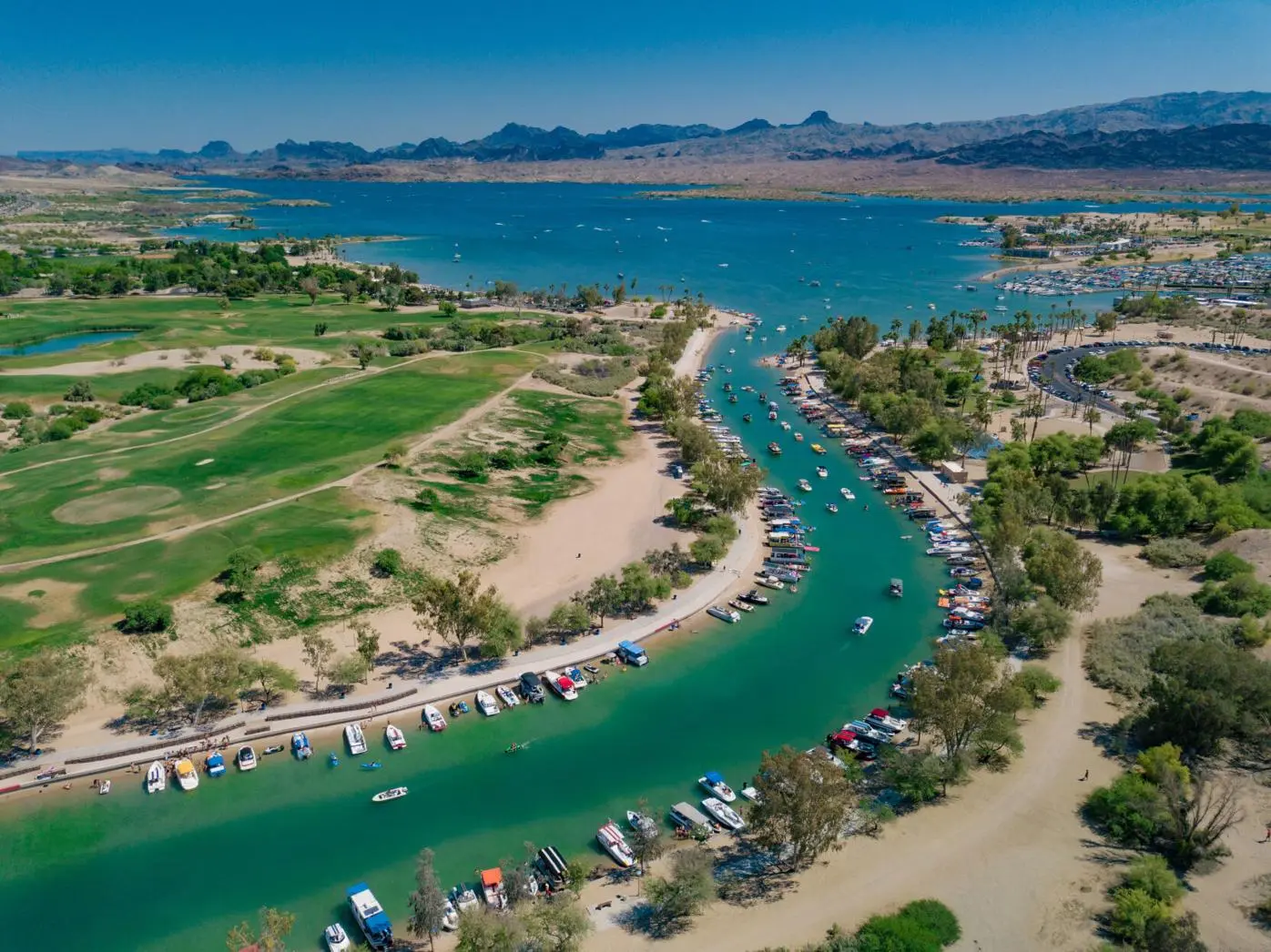
MAINLAND
Bridgewater Channel is the man-made waterway beneath London Bridge that separates the Island from mainland Lake Havasu City. It is where the bridge’s history, pedestrian waterfront, beaches and boat traffic all meet.
Open the guide